Showing posts with label 1st Six Weeks. Show all posts

Sunday, October 18, 2015

Unit 2: Exploration & Colonization Part II

This project idea isn't my idea, so I've got to give credit where credit is due. I got the idea from this blogger after stumbling onto her stuff via Pinterest.


I don't know what her demographics are or what her kids' levels look like, but I wanted to scaffold my students' work a little more in order for them to have success on this project. 

First, I made a bad example and a good example of the project. I had them pass them around and talk in groups about what a good project looks like and what the bad project looked like and how to fix it.


Also, rather than have them Google information, we used this website:


I also gave them a similar research sheet, but I wanted them to practice citing their sources, so I gave them a column for sources, although mostly their information all came from the same website. 

The students' learned about and presented information on their colonies and it stuck well enough that I had one confide to me he knew the answers on a district test four weeks later because he had found out that information while researching his colony. 

Next year, I intend to repeat the project, but I will tweak it to encourage the kids to take the map parts home and include more color. They look great, but I think the originals from Room 6's are a little more aesthetically pleasing.

Even so, for a first six weeks project that included research before the scope and sequence calls for teaching the research process, it turned out great.


Social Studies & Reading Integration


Since nonfiction passages have the highest Lexile levels on the STAAR test, my grade level set a goal to work more on nonfiction throughout the year to help raise students' ability to comprehend nonfiction and to integrate more Science into the Reading classroom.

During the first six weeks, I took pieces of Teacher Created Materials digital books on the 13 Colonies and broke it up into small chunks. I then paired the students off and had them read through their chunk and break it down. 

To build their comprehension, we practiced Repeated (Close) Reading:

  1. Read the section for yourself silently
  2. Read it again with your partner and talk about it
  3. Read it a third time and work on the Figure 19 skill assigned
  4. Read it a fourth time and break out the main idea for each paragraph
The students did this in pairs and made posters on large sheets and then presented/taught their information to the rest of the class. This is a very time-costly process, but the deep reading really produces growth.


Social Studies & Fluency


We also built reading fluency by performing two plays about the colonists. 

We used this book:


I looked it up on Amazon and only two people have bothered to review, and one of them was scathing and rather hateful. So to be fair, if you go looking for this book, it says it's easy to read and it it is definitely that. If you teach in a school with students on fifth grade level, you may find the readability far below what you're looking for. However, if you work with ESL, bilingual, or struggling readers, these plays can be very empowering. Know your students. Mine ate it up! We hosted multiple performances throughout the day. Talk about reading with purpose. Performance is a great purpose for reading!


Thursday, October 1, 2015

Point of View: Limited vs. Omniscient


D: What is point of view?


  • Point of view is who is telling the story.

P: How do I find point of view?

  1. Ask, "Who is telling the story?"
  2. Classify as:
First Person: The narrator is a character in the story. 

Third Person Limited: The narrator is inside the head of only one character.

Third Person Omniscient: The narrator is outside the story and knows everything.


C: When/why do I find point of view?

  • Point of view affects the mood of the story. A different narrator makes the story feel different.

Wednesday, September 30, 2015

Theme

D: What is theme?

  • Theme is the life lesson (moral) in a work of fiction.

P: How do I find theme?

  • Find the character who changed.
  • Ask, "How did the character change?"
  • Ask, "What does this tell me about life?"

C: When/why do I find theme?

  • I find theme during/after reading.
  • I find theme because it helps me apply the story to my own life.

Monday, September 28, 2015

Dialogue & Quotation Marks


D: What is dialogue?

  • Dialogue is when characters talk.
  • Dialogue uses quotation marks to mark itself.
  • Dialogue is a sentence that has two parts: dialogue and dialogue tag.

"I want nachos," Ramon whined.


Ramon whined, "I want nachos."

P: How do I write dialogue?


  1. Use quotation marks around the dialogue.
  2. Follow these punctuation models.

"___________," said Ramon.
Ramon said, " ____________."


"__________?" asked Ramon.
Ramon asked, "__________?"


"__________!" shouted Ramon.
Ramon shouted, "_________!"


C: When/why do I use dialogue or quotes?


•I use dialogue when writing narratives.
•I use quotes when doing research.

Thursday, September 10, 2015

Interactive Reading Journal

This is a follow up post to this article on Interactive Reading:

Interactive vs. Independent Reading


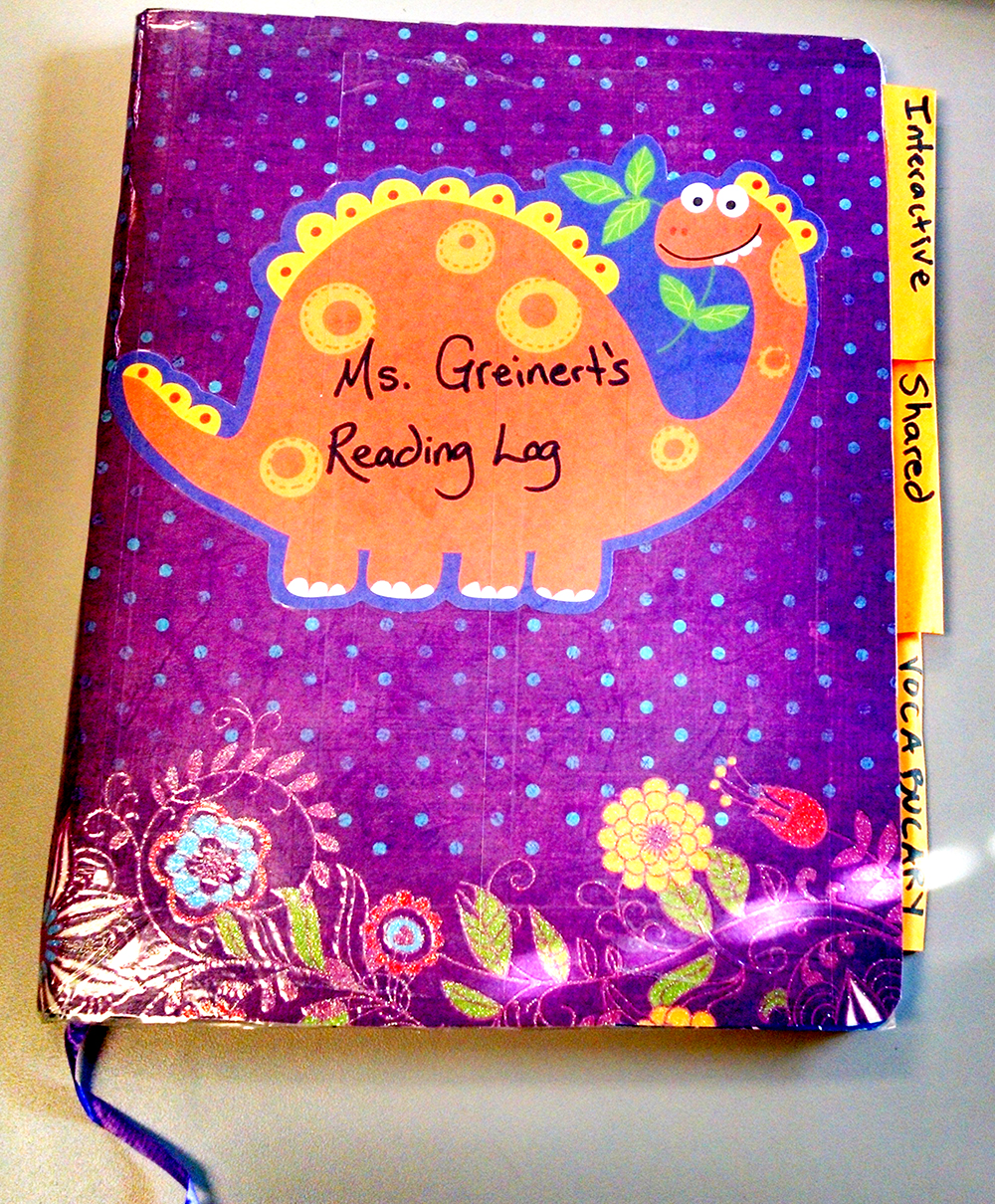
To set up our Interactive Reading Logs, we added three tabs:


  • Interactive Reading
  • Shared Reading
  • Vocabulary

We counted out 36 pages for Interactive Reading, then split the rest of the journal in half. We used composition books (very affordable), and I decorated each student's log after class with dinosaur print I got from the Dollar Tree for a dollar. I also glued in a ribbon to mark the page, making it easy for students to change sections or mark a page with notes they want me to see.


Plickers Website


On the back, we glued down our Plickers cards. Plickers is a great website for quick reviews. By turning the card different directions and scanning the Plickers with your cell phone through their app, the website reads the students answers. It's technology integration without having to have an electronic device per student. All you need is your own cell phone with the app downloaded and an account on Plickers.   


Saturday, August 29, 2015

Favorite Fiction Mentor Texts

A mentor text is a book that a teacher uses repeatedly to illustrate different concepts. Already being familiar with the story itself means that students can focus on certain aspects of the story or reading strategies being applied to the story.

I'd like to share a few of my favorite mentor texts today for fifth grade appropriate fiction. These are all books that both I and my students love. According to my school librarian, I'm a "book snob" (I have standards!), so these are books that really had to impress me to make the cut as something I want to read and reread.

King Midas: Stewig/Rayyan


In fifth grade in Texas our special genre for our year is myths. Where fourth grade gets to introduce folktales and tall tales, fifth graders get to dip their toes into Greek/Roman and Norse mythologies for the first time in a school setting.

King Midas is a classic tale of king who loved gold too much, and this retelling of the story is a powerful one with a big dose of whimsy and humor. Fifth graders like details and the illustrations in this book tell the story so well that you can make inferences and draw conclusions just by inspecting all corners of the page with as much attention as if you were chasing down Waldo. 

The story provides many opportunities to talk about character traits and change. It also has heaps of foreshadowing if you look for the hidden pictures inside the pictures. 

The Selfish Giant: Oscar Wilde/Chris Beatrice


This story is a classic, and as much as I love "The Happy Prince", Wilde has a better narrative voice here and the 19th century world is easier for younger modern readers to understand than its other famous companion story. 

The story is amazing, and the illustrations by Beatrice are the most beautiful version I've ever seen in any store anywhere for this classic story. You can really dive into them and hunt out the meaning of the pictures to use practicing predictions and making connections. Beyond that, the symbolism at the end (spoiler: the giant dies) is very challenging and leave some students feeling a little confused though still intrigued. This is good. Some students will be ready to start understanding symbolism already, and others you can start down the path toward carving out those synaptic pathways in their brains. 

Also, it makes a good complement to King Midas because they share similar (though not equal) themes, and reading them both makes for an interesting compare/contrast discussion. 

The Summer My Father was Ten: Brisson


Last but not least, this book is a great example of realistic fiction. I like it because the kids make so many personal connections. Everyone's gotten carried away while playing and done something bad at some point in their childhood, and the lesson about forgiveness and friendship in this book is powerful and deep. 

The illustrations are also deep, just like my other favorite books, adding another layer to the story rather than just being pictures.

Students sometimes like to make the connection between the kids playing in Mr. Bellavista's garden to the children playing in the Selfish Giant's garden. Again, it's another book that really connects well for discussions when read in tandem with the others, even though they all represent different genres.


Finding the Books

While I happened to get two out of three of these books at a Half-Price books in Dallas, they're all available on Amazon in case you can't find them in your school or local library. They're worth owning. You won't regret. 

Sunday, August 23, 2015

Context Clues


D: What are context clues?


  • Context clues are bits of information in a text that help you understand an unfamiliar word.

P: How do I use context clues?


[Glue in handout here]


C: When/why do I use context clues?

  • I use context clues during reading.
  • I use context clues to help me quickly make sense of a new word.

[Make the following T-Chart.]


[Using a mentor text with words you've chosen beforehand, have students use context clues to puzzle out some unfamiliar words. Model a few times and use gradual release model.]


[5.2.B use context (e.g., in-sentence restatement) to determine or clarify the meaning of unfamiliar or multiple meaning words;]

Saturday, August 22, 2015

How to Read a Dictionary Entry


D: What is a dictionary entry?

  • A dictionary entry is a group of text including the pronunciation, part of speech, definition(s), and example of how to use a particular word.

P: How do I use a dictionary entry?


[Glue in dictionary entry here and label parts with teacher.]

  1. Look at the part of speech. Does it match the way the word is used in context?
  2. Read each of the definitions and choose the one most closely connected to what I'm reading or studying.
    • Don't ignore the examples! They help!
Tips & Tricks:
  • If you can't find a word, remove a prefix or suffix.

Examples:

Preschoolers: Pre-   school    -er   -s
Antispam: anti- spam
Remodeled: re- model -ed
Programming: program -ing


[5.2.E use a dictionary or glossary to determine the meanings, syllabication, and pronunciation of unknown words.]

How to Use a Dictionary


D: What is a dictionary?


  • A dictionary is your new best friend.

P: How do I use a dictionary effectively?

  1. Open up toward the beginning, middle, or end based on the first letter. (A-G) (H-P)(Q-Z)
  2. Check the guide words. Compare word letter by letter to see if word comes between guide words.
  3. If after first guide word, check to see if it comes before the second guide word.
  4. If it fits between the guide words, scan the entries. If it doesn't fit, turn the page.

[Glue in copy of dictionary page and label the guide words.]


C: When/why do I use a dictionary?

  • I use a dictionary when I want to learn the meaning, pronunciation, or spelling of an unfamiliar word.
  • I use a dictionary anytime! (except on Spelling tests...)


(5.2.E  use a dictionary or glossary to determine the meanings, syllabication, and pronunciation of unknown words.)

Summarizing


D: What is summarizing?


  • Summarizing is retelling the most important parts of a story accurately.

P: How do I summarize fiction?

  • I put the right character with the right action in the right order.
  • I focus on the important events.
    • Important events are the events that are connected to the conflict closely.
  • Beginning, Middle, End
  • I use the Fiction 4Q.

[Cut and glue in 4Q foldable.]


C: When/Why do I summarize?

  • I summarize during and after reading.
  • I summarize because it helps me know if I understand and helps me remember the story.


[5.9 Reading/Comprehension of Text/Independent Reading. Students read independently for sustained periods of time and produce evidence of their reading. Students are expected to read independently for a sustained period of time and summarize or paraphrase what the reading was about, maintaining meaning and logical order (e.g., generate a reading log or journal; participate in book talks).  

5.8.A  sequence and summarize the plot's main events and explain their influence on future events;

Fig19.E (E) summarize and paraphrase texts in ways that maintain meaning and logical order within a text and across texts; and]

Imagery


Imagery is descriptive phrases that authors use to help me visualize better.

[Draw a T-Chart labeled "Examples" and "Nonexamples".]


Reread a mentor text together, and using guided release, sort out examples of phrases and sentences that are imagery and that are not imagery and discuss why they are or are not. Some imagery is stronger than others, so talk about it. There's enough gray area to spark some interesting thought and discussion. 


[Fig19.C monitor and adjust comprehension (e.g., using background knowledge, creating sensory images, rereading a portion aloud, generating questions); 

(8)  Reading/Comprehension of Literary Text/Sensory Language. Students understand, make inferences and draw conclusions about how an author's sensory language creates imagery in literary text and provide evidence from text to support their understanding. Students are expected to evaluate the impact of sensory details, imagery, and figurative language in literary text.]

Visualizing

'

D: What is visualizing?

  • Visualizing is making a movie in your mind while you read.

P: How do I visualize?

  1. I understand the vocabulary.
  2. I use my memories to imagine what I'm reading by phrase or by sentence.
  3. I update my visualization as I go.
  4. I pay attention to imagery.
[Glue handout here.]

Imagery is descriptive phrases that authors use to help me visualize better.


C: When/why do I visualize?

  • I visualize while I read.
  • I visualize because it helps me understand and it makes reading fun.


[Figure 19.C (C) monitor and adjust comprehension (e.g., using background knowledge, creating sensory images, rereading a portion aloud, generating questions);]

Fix Up Strategies

What do I do when I don't understand what I read?

  • Reread what I didn't understand.
  • Reading what came before.
  • Slow down.
  • Use context clues or dictionaries to solve new words.
  • Remind myself of what I already know.
  • Talk it out with a partner.
  • (Change books.)
  • Take a break.
  • Talk to the teacher.


{Figure 19.C monitor and adjust comprehension (e.g., using background knowledge, creating sensory images, rereading a portion aloud, generating questions);]

Checking Understanding


D: What is checking understanding?


[Glue in handout here]

  • Checking understanding means I know when I'm reading with my eyes and brain, not just with my eyes.

P: How do I check my understanding?

  • While reading I notice:
    • frustration
    • tired
    • slow
    • many unknown words
    • not visualizing
  • After reading:
    • cannot retell what I read

C: When/Why do I check my understanding?

  • I check my understanding during and after reading.
  • Checking understanding helps me make meaning.

[Figure 19.C (C) monitor and adjust comprehension (e.g., using background knowledge, creating sensory images, rereading a portion aloud, generating questions)]

Previewing Texts


D: What is previewing?

      • Previewing is gathering information before reading a text.

P: How do I preview?

      • For a Book:
        1. I read the whole title and think about it. I predict the genre.
        2. I examine (look carefully) the illustrations.
        3. I read the blurbs.
        4. I set a purpose for reading.
        5. I use the five finger rule.
      • Previewing on a Test
        1. I circle the title and think about it. I predict the genre using clues.
        2. I read the questions and circle 2 or 3 important words.
          • DO NOT READ THE ANSWER CHOICES!

C: Why/when do I preview?

      • I preview before reading. I preview because it helps me choose just-right books and make connections to my schema. This helps me understand what I'm reading better when I begin.

[Figure 19.A (A) establish purposes for reading selected texts based upon own or others’ desired outcome to enhance comprehension;]

Kinds of Knowing

Declarative Knowing:
      • What is the strategy?

Procedural Knowing:
      • How do I do the strategy?

Conditional Knowing:
      • When and why do I do the strategy?


Friday, August 21, 2015

Choosing A Just-Right Book


Steps to Choosing a Just-Right Book


  1. Read spines of books and look for an interesting title.
  2. Read the blurb on the back or inside of the book. If it's still interesting, continue, if not, replace on shelf.
  3. Read the first full page of the book and keep count of the words you don't know.
  4. Use the Five Finger Rule to decide if it's a good match for your reading level.
  5. Sit down with the book in front of the shelf or at a table and read the first chapter.
  6. If you like it, check it out!